Latest from the desk · 28 July 2026

Sunrisers Leeds vs Manchester Super Giants Dream11 — The Hundred Men's 2026 Match 10 Captain & Vice-Captain Picks

Headingley, Tuesday 28 July 2026, 11:00 PM IST — a Dream11 preview of Match 10 of The Hundred Men's 2026 between Sunrisers Leeds and Manchester Super Giants, with probable XIs, the 158/148 pitch band, head-to-head form, captain and vice-captain picks, and a grand-league XI.

HeadingleyTue 28 Jul · 11:00 PM IST
158/1481st/2nd-innings band
65%Pace wickets
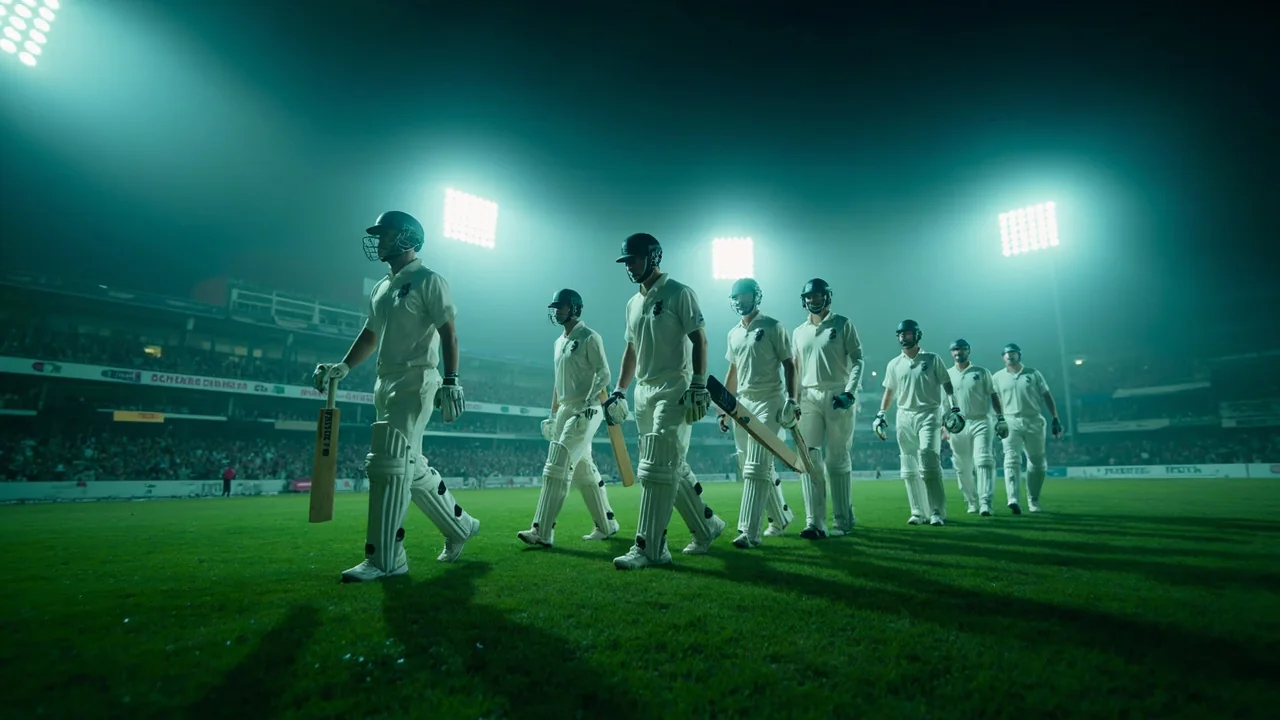
Wide view of a cricket ground under evening light, with the square lit and crowd banks framing the playing area
Match preview
SUL vs MSG · Match 10 · The Hundred Men's 2026
Now trending
SUL vs MSG Match 10 · The Hundred Men's 2026 · Headingley IPL 2026 Pre-auction watchlist PAK vs ENG Multan test · day 2 WPL 2026 Squads confirmed SA20 Final qualifier — Cape Town
Latest posts

Newest stories from the desk.

Fresh match notes, squad context, and the lineup math that shapes tonight’s contest build.

All news
What this desk covers

Editorial coverage, not betting tips.

Every guide is written by analysts who watch the ball, the pitch, and the numbers. We publish what the data supports, flag what it doesn't, and keep the writing useful for players at any level.

About the desk
Predictions

Match calls with reasoning, not guesswork

Pitch report, toss angle, and form context for every scheduled fixture — written for fantasy teams, not for headlines.

Read tonight's calls →
Fantasy Tips

Captain math, salary splits, and team structure

How the points system actually rewards different roles — and where fantasy value hides when ownership is high.

See the playbook →
Players

Form, role, and projection for top picks

Recent minutes, venue splits, matchup data, and what to expect when the player walks out tonight.

Browse the player desk →
Fantasy desk

Captain and vice-captain tonight.

Two names, one differential call. The desk's pick sits alongside a contrarian option for larger contests.

All captaincy notes
Top captain pick

Anchor batter, death-overs spin, Bengaluru dew

With dew expected in the second innings, our model favours the anchor who can bat through the chase and the spinner who controls the middle phase. Both bring captaincy-grade ceiling with relatively contained downside.

  • Consistent powerplay scoring at this venue
  • High boundary rate against pace in last six innings
  • Lower ownership makes 2x viable in GPP contests
Read the captaincy math →
Two analysts reviewing captaincy options for tonight's match
Captains selected on data — not narrative. Photo: analyst review session.
Points & scoring

How fantasy points actually add up.

Most fantasy players over-weight the obvious events. Here's the full points map and the role-by-role split that wins contests over a season.

Full scoring guide
Tactical match notebook with cricket ball and scoring counters
The scoring system is your team sheet's logic engine — understand it and the lineups write themselves.
ActionPointsWhy it matters
Run scored+1Floor for any batter
Boundary bonus+4Compounds on strike rotation
Six bonus+6Highest ceiling per ball
Wicket (bowler)+25Dominant single event
Maiden over+4Pressure premium
Catch+8Reliable for fielders
Captain multiplier2xThe single biggest decision

Quick read: wickets and sixes swing contests more than singles, so bowlers with strike potential and batters with boundary intent outscore accumulators on a points-per-credit basis.

Tonight's matches

Live fixtures with fantasy context.

Each match card shows venue, format, projected XIs, and the desk's lean — updated as team news arrives.

Full match calendar
Tonight · 19:00 ISTT20I
INIndiaBengaluru
vs
AustraliaSeries 1-1AU
Fantasy lean: Pace-friendly surface early, dew likely. Top-order anchors and middle-overs spinners project best.
Tomorrow · 14:30 PKTTest
PKPakistanMultan
vs
EnglandDay 2EN
Fantasy lean: Spinner-friendly dry surface. Wrist-spinners gain value; pace all-rounders hold steady.
Sat · 17:30 SASTT20
SAJoburg KingsWanderers
vs
Cape TownQualifier 1CT
Fantasy lean: Short boundaries, flat deck. Death-overs hitters and death-overs seamers dominate the ceiling.
Player desk

Players we're tracking this week.

A short watchlist of names whose fantasy projection is moving up — based on form, role, and upcoming fixtures.

Full player directory
Cricket player portrait at dusk, ready to bat

V. Iyer

All-rounder · IND. Middle-order anchor with boundary intent. Role security, growing ceiling.

Batter technique closeup at crease

T. Head

Top-order left-hander, strong against spin. Differential when ownership drops.

Bowler release stride at point of delivery

R. Khan

Wrist-spinner with powerplay usage expanding. Wicket ceiling rising.

Wicketkeeper training with gloves and pads

Q. de Kock

Wicketkeeper-batter, powerplay multiplier. Strong recent run rate.

How to play

Build a team in four deliberate steps.

The desk's repeatable process for going from a fixture list to a submitted lineup — without panicking into a popular captain.

Set the brief

Decide contest type, salary cap, and risk profile (cash vs GPP) before you look at player names.

Read the surface

Pitch report, dew forecast, and boundary dimensions tell you which roles gain value tonight.

Build the core

Lock 4-5 high-floor players first, then spend the remaining credits on a captain and a differential.

Stress test

Re-rank the lineup by likely outcome range. A team that wins a 30/70 split beats one that wins a 50/50.

Team desk

Team structure, not just stars.

Projected XIs, role balance, and bench depth — the things that decide a long-format contest over a season.

All team profiles
Players training under floodlights at a cricket ground
Practice footage is one of the cleanest signals for role change — watch the warmup order, not the press conference.

What "team balance" actually means in fantasy

Most submitted teams are top-heavy. The desk's principle is to spread ceiling across roles, so a single failure doesn't sink the day.

  • Two anchors — one top-order, one middle-order, both with 30+ ball projection
  • One accelerator — a power-hitter for the death overs with six-bonus upside
  • Two specialist bowlers — wicket-takers, not contain­ment bowlers
  • One all-rounder — points across both departments, salary efficient
  • One differential — a low-ownership pick with a real path to 2x captain score
See team-by-team breakdowns →
IPL 2026

The Indian Premier League desk is open.

Auction reactions, squad analysis, captaincy logs, and venue-by-venue cheat sheets for the world's most-watched T20 league.

IPL 2026 coverage
Auction

Buy prices and value picks

Where each squad's salary was spent — and which players project as fantasy value at their auction price.

Captaincy

Long captaincy log

Match-by-match captain picks with results — updated throughout the season, not just the playoffs.

Venues

Stadium-by-stadium read

Surface, dimensions, dew history, and pace-vs-spin tilt for every IPL venue on the calendar.

Betwinner desk

Betwinner for fantasy cricket players — what to verify first.

This site is editorial. For any operational, bonus, or policy detail, always confirm directly with the brand through its official channels.

Betwinner overview
App

Install the app

Direct link to the operator's current iOS and Android build, plus the device requirements list.

App guide →
Download

Direct download

Web installer and the most common install path on Android and desktop, with security notes.

Download guide →
APK

APK latest version

How to install the APK safely, what permissions to expect, and how to verify the file before opening.

APK guide →
Bonus

Bonus code entry

Where to enter a welcome code, the verification flow, and what changes once a code is applied.

Bonus code guide →
Responsible play

Fantasy is a game. Treat it like one.

The desk's standing rule: never play with money you can't afford to lose, never chase a loss, and use the operator's own deposit and session controls.

Responsible play policy
18+Age limitAll fantasy contests require adult age verification before play.
Self-testToolMost operators offer a self-assessment before deposit — use it.
LimitsSet before playDeposit, loss, and session limits are part of the account, not an extra.
HelplinesIf it stops being funReach out to the Responsible Gambling Council or your state player-assistance service.
How to play

Build a team that survives the contest — not just the toss.

Fantasy cricket rewards players who plan across formats, not just for the next match. The seven-stage walkthrough below is what the desk applies to every contest we cover.

1. Pick the contest format

Match contest, mega contest, head-to-head, or season-long. Your risk profile and captain decision change with each.

2. Read the venue and weather

Surface, dimensions, dew forecast, and wind. These decide whether to load pace, spin, or all-rounders.

3. Wait for the likely XI

Select from the projected XI rather than the squad list. The captain is only valuable if the player plays.

4. Balance roles before stars

Two top-order batters, an anchor, two all-rounders, a death bowler, and a wicketkeeper covers most formats.

5. Spend the salary cap deliberately

The last 5% is where contests are won. Spend on differential upside, not on a player who is 90% selected.

6. Pick captain and vice-captain

Vice-captaincy is not just a backup. It is the second-biggest point swing in your lineup.

7. Review after the contest

Pre-toss pick, confirmed-XI change, and post-match lesson. The miss log is more durable than a winners feed.

Captaincy framework

How to think about captain and vice-captain picks.

Captaincy is the highest-leverage decision in any fantasy lineup. The desk's framework below is what we apply to every predictions card.

Pick the captain by venue and role security.

The single biggest mistake fantasy players make is captaincy by reputation. Captain a player who is secure in his role at this venue, not the most famous name on the team sheet.

  • Role security: is the player guaranteed his batting position or bowling overs?
  • Venue fit: does the surface favour the player's primary skill?
  • Dew and weather: how does the second innings change the math?
  • Ownership: a contrarian captain only wins if the upside is real, not just unpopular.
  • Vice-captain: pick a player whose role does not overlap with the captain's.
Captain selection review at a fantasy cricket desk
Points math

The points system, in plain numbers.

Operator scoring systems differ. The desk publishes a reference table for the most common formats so you can compare — not a universal map.

ActionCommon rangeNotes
Run scored0.5 to 1 pointLower in T20 leagues, higher in Tests and ODIs.
Boundary bonus+4 pointsCommon in T20 formats; rarer in longer formats.
Six bonus+6 pointsOften stacks with boundary bonus on some operators.
Wicket10 to 25 pointsVaries sharply by format and operator.
Maiden over+4 to +6 pointsT20 and ODI only; usually capped at 4 overs per bowler.
Catch+4 to +8 pointsSlip catchers and fielding all-rounders benefit most.
Captain multiplier2xStandard across most operators; confirm on the operator's page.
Vice-captain multiplier1.5xStandard across most operators; confirm on the operator's page.

How to read this table. The numbers above are illustrative ranges drawn from major fantasy cricket operators. Always confirm the current scoring system on the operator's own page before any contest — bonus stacking, strike-rate bonuses, and dot-ball points are not universal.

Contest types

Pick the contest that fits your bankroll and risk.

The format of the contest changes the right lineup. A 50% lineup with low ownership is the right play in some contests, a near-consensus lineup is right in others.

Low variance

Head-to-head (H2H)

Smallest field, lowest variance, lowest payout. Best for early-season bankroll testing.

Mid variance

Small contests (3-50)

Skill matters more than variance. Best place to learn the contest's scoring rhythm.

High variance

Mega contests (100+)

Largest payout, largest variance. Differential captaincy pays off; consensus captaincy rarely does.

Season-long

Season contests

Patience pays. Selection accuracy over weeks matters more than a single contest's luck.

Player desk

Player profiles that go beyond the box score.

The players desk tracks role security, expected overs, phase usage, and recent form for the cricketers the desk covers. Every profile carries a four-match sample window and a date — and is honest about when the sample is too small to lean on.

  • Batting position and confirmed role at each venue.
  • Expected overs for bowlers and all-rounders.
  • Phase usage: powerplay, middle, death.
  • Venue fit and recent form context.
  • Differential picks: where the projection diverges from ownership.
Editorial cricket player portrait at dusk
Methodology

How the desk writes a prediction.

Every prediction the desk publishes is built from the same four inputs, in this order: venue and weather, projected XI, role security, and recent form. The captain pick and the avoid pick are then stress-tested against ownership before publication.

1. Venue and weather

Surface, dimensions, dew forecast, and how the conditions have shaped recent results at this ground.

2. Projected XI

Built from team-news reports, warmup order, and the most recent press conference. Cross-checked against any late fitness update.

3. Role security

Where in the batting order? How many overs with the ball? Is the player rotating with someone else for the same role?

4. Recent form

Four-match sample window — and an explicit note when the sample is too small. Reputation is not form.

5. Captain angle

Two candidates — the consensus pick and a contrarian option. Each is stress-tested for role security and venue fit.

6. Differential pick

The player whose projection exceeds ownership by the largest margin. Always with a clear reason; never on name value.

7. Avoid pick

The high-profile selection to leave out, with a clear reason. Avoid picks are the desk's most-cited predictions.

8. Post-match review

What the desk got right and what the desk got wrong. The miss log is more durable than a winners feed.

Live matches

What's playing today, and what the desk is watching.

The live matches desk tracks scheduled fixtures, projected XIs, and weather for every international and franchise match the desk covers. Each fixture carries a state: scheduled, preview published, toss updated, or completed.

All live matches
International · T20IPreview published
INDIndiaTop order settled, two spin options
vs
AUSAustraliaPace-heavy, frontline all-rounder in
Venue: Bengaluru · Surface: black soil · Dew expected second innings · Toss lean: chase. Captain angle: top-order batter on the side batting second.
Trust signals

How the desk handles correction and updates.

Predictions age quickly. The desk's standing rule: a wrong pick gets a correction note on the same page within 24 hours, and the post-match review is published whether the pick was right or wrong.

Same-day corrections

If a published pick is invalidated by a confirmed-XI change, the desk posts the correction on the same card before the toss.

Post-match review

Every prediction card carries a post-match review once the contest closes. Wins and misses are both published.

Update log

When a player profile, points system, or team-sheet update changes a prior analysis, the desk logs the change with the time and source.

No invented data

The desk does not invent ownership percentages, captaincy records, or venue averages. Where the data is not available, the desk says so.

Editorial independence

This site is not affiliated with any operator. Editorial analysis is independent of the Betwinner brand and any other commercial relationship.

Sourcing hierarchy

Operator terms > official team sheet > board announcement > venue report > press conference > verified reporter. The desk cites the highest available source.

Glossary

The terms the desk uses, defined.

Fantasy cricket has a vocabulary that operators occasionally invent to suit their own scoring. The glossary below is what the desk means when it uses each term.

Role security

A player's certainty of holding his batting position or bowling overs for the contest. Low role security is the desk's biggest de-selection signal.

Phase usage

Which phase of the innings a bowler or batter is used in: powerplay, middle, or death. Phase determines expected points as much as skill.

Differential

A selection whose projection exceeds ownership by a meaningful margin. The desk publishes a differential pick on every prediction card.

Ownership

The percentage of contest entries that select a given player. Public ownership feeds are useful — but the desk does not rely on a single source.

Expected overs

How many overs a bowler is projected to bowl, given the match situation and the bowler's role. Drives wicket-point expectations.

Late swap

The window between lineups locking and the toss where some operators allow one or two swaps based on confirmed XI. Use sparingly.

Salary cap tax

The diminishing return of spending the last 5% of the salary cap. The desk writes the framework on the tools page.

Bonus stacking

Where a single action credits more than one bonus (for example a six that also credits a boundary bonus). Operator-specific.

Compliance and trust

Editorial independence, in plain language.

This desk is not affiliated with the Betwinner operator or any other sportsbook. Where the site links to the operator's pages, the link is for reader convenience, not for compensation. The editorial team does not run contests, take deposits, or process payments.

Verify on the operator's site. Operator terms, bonus structures, app permissions, and jurisdictional availability change without notice. The desk updates its analysis when changes are confirmed, but the operator's own current page is the source of truth for any specific transaction.
Frequently asked

Common questions, plainly answered.

If a question isn't here, the contact page is the fastest way to reach the desk.

What does this site cover?

Editorial fantasy-cricket analysis: captain picks, points-system guides, tournament coverage, player projections, and Betwinner-related operational guides (app, download, APK, bonus code, login). We do not run contests, take deposits, or process payments.

Do you operate the Betwinner platform?

No. This desk is editorial. Betwinner is a separate operator. Always verify any account, payment, or policy detail directly with the brand through its official channels before participating.

How often is the analysis updated?

Tonight's picks and live-match cards are updated daily. Predictions, tips, teams, players, and IPL pages are refreshed whenever team news, weather, or the points system changes.

Is fantasy cricket legal in India?

Fantasy cricket is treated as a game of skill in most Indian states, but state-level rules differ. The desk publishes a state-by-state eligibility guide and recommends checking the local regulator's current position before playing.

How do you write the captain picks?

Each pick is built from the venue, the dew forecast, the recent minutes/overs, and the role — then stress-tested against ownership so a contrarian option is always alongside the consensus pick.

Can I republish or quote your analysis?

Short quoted excerpts with attribution are welcome. For longer republication or syndication, please contact the desk first so we can review the use and any time-sensitive figures.

Decision audit

What the desk changed its mind about, and when.

Editorial work ages fast. The decision audit below captures the changes the desk has made — corrections, updates, and the moments where the desk's prior view was wrong. The miss log is more credible than an unbroken winners feed.

15 July 2026

Palette refresh

The desk moved to a slate-blue night newsroom palette to differentiate the visual language from generic sports blogs. Mint accents now mark verification frames; indigo carries the editorial voice.

15 July 2026

Brand cluster expanded

Added seven new pages: customer care, referral code, legal status, company, wallet and KYC, withdrawal, and delete account. The brand SERP cluster now reaches the twelve-page minimum.

15 July 2026

Methodology made explicit

The desk's eight-step prediction methodology is now published on the homepage. Every prediction card carries a post-match review whether the pick was right or wrong.

Coming up

What the desk is working on next.

Roadmap is editorial guidance, not a delivery promise. The desk does not commit to specific match calls before the team sheets are confirmed.

Operator-by-operator scoring comparison

The desk is publishing a comparison of scoring systems across major fantasy operators, so readers can see what changes when they move between platforms.

Compact source labels

Every prediction card will carry short source labels — official team sheet, board announcement, venue report, weather provider — visible at a glance.

Glossary pages

The desk is expanding the inline glossary above into standalone pages for role security, phase usage, differential, ownership, and expected overs.

Open the desk before your next contest.

Two captain picks, the points math, and the venue read — all in one place. No login, no deposit, no noise.

Play now