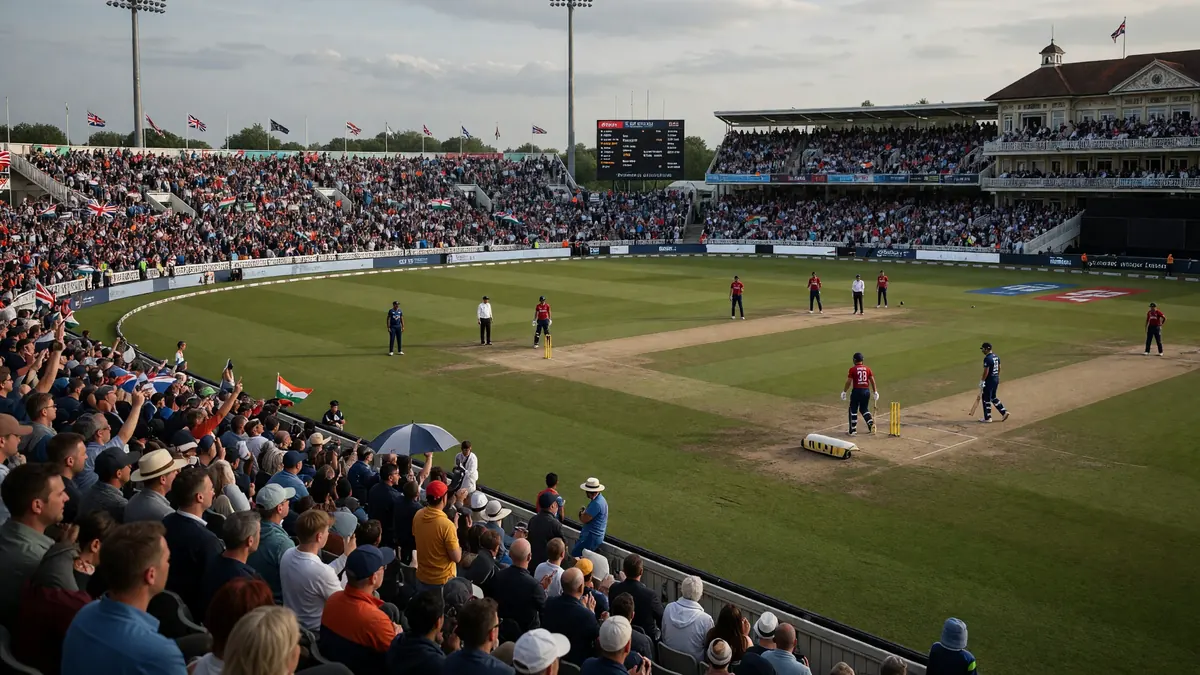
When the third one-day international of India’s 2026 tour of England reached Lord’s on Sunday, 19 July, the three-match series was already balanced at one win apiece. Preview coverage published the afternoon before — 18 July 2026, 05:56 PM IST, by Sai Vaitla for Cricket Addictor — set out the fixture details, the damage from Cardiff, the predicted elevens, and the surface and weather notes that fantasy managers were still weighing on the morning of the decider.
This desk returns to that pre-match record now as a retrospective, not as a live call. The facts below stay inside what that briefing documented: times and venue, the two earlier results, Washington Sundar’s hamstring problem, the floated XIs, the Lord’s pitch sketch, the London forecast, the long head-to-head ledger, and the India broadcast window. Where the briefing offered predictions rather than confirmed selections, that distinction is kept explicit.
How the series arrived locked at 1-1
India had taken the opener in Birmingham by six wickets. Captain Shubman Gill made 80 before he retired hurt, a contribution that defined the first match’s batting narrative and left fantasy sides that had backed the opener in a strong position even after the early exit from the crease.
England answered in Cardiff with a four-wicket chase. Joe Root finished unbeaten on 99. Gus Atkinson and Jofra Archer claimed three wickets each. India’s innings told a familiar collapse story for contest managers who had stacked middle-order upside: from 178 for three the visitors folded to 233 all out. Virat Kohli (65) and Shreyas Iyer (66) both posted fifties; the rest of the card did not convert the platform. That single swing flipped series momentum and forced every fantasy plan into a true decider frame for Lord’s.
By the time the squads reached London, the tactical questions were no longer abstract. England had evidence that their pace attack could dismantle India’s middle once the set batters fell. India had evidence that Gill’s top-order output and the Kohli–Iyer axis could still carry a chase or a first-innings total when the collapse did not arrive. Fantasy ownership patterns for the third match therefore split between “trust the form names” and “price the home seamers who just took six wickets between them in Wales.”
Fixture frame: Lord's, Sunday start, India broadcast window
The third ODI was scheduled for Sunday, 19 July 2026 at Lord’s, London, with a 11:00 AM local start — 3:30 PM IST / 10:00 AM GMT. For managers building teams from India, that afternoon window mattered as much as the pitch note: confirmed elevens and final weather calls typically land close to the toss, and a 3:30 PM IST broadcast start left a narrow last-edit gap for anyone waiting on official sheets.
Television in India was listed on the Sony Sports Network. Digital streaming was listed on JioHotstar (app and website). Coverage was set to begin before the toss at 3:30 PM IST, which is the practical cue most managers use when locking captain and vice-captain after the final warm-up sightings.
The Sundar injury and India’s bowling puzzle
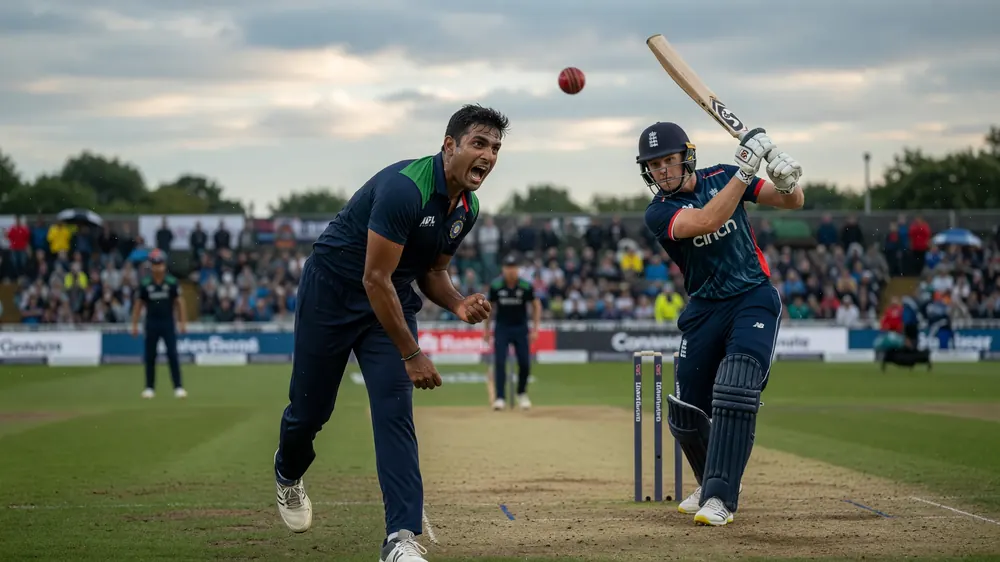
Team news heading into Lord’s was not a full squad overhaul. The clearest forced decision sat in India’s bowling group. Washington Sundar suffered a hamstring injury and did not field in the second innings at Cardiff. Preview notes floated Kuldeep Yadav as a possible bowling replacement — a classic left-arm wrist-spin option for a venue where the middle overs still need control even when the new ball does the early damage.
For fantasy construction that single change was high leverage. Sundar’s dual value (runs lower down plus overs) is hard to replace with a pure bowler. Kuldeep’s upside is wicket-taking in the middle phase rather than batting depth. Managers who had been carrying Sundar as a budget all-rounder suddenly faced a binary: pay up for Axar Patel’s more secure batting-and-bowling blend, or take Kuldeep as a differential spinner and free salary for a fifth batter or a second English seamer.
The rest of India’s attack, as projected in the briefing, still ran through Jasprit Bumrah at the head of the pace unit, with Prasidh Krishna and Gurnoor Brar completing the seam look. That structure rewards early wickets and death control more than marathon spin spells — consistent with a Lord’s surface expected to offer seam and swing while the ball was hard.
Predicted elevens, read as role maps not lock sheets
The Cricket Addictor preview listed the following projected India XI: Rohit Sharma, Shubman Gill (captain), Virat Kohli, Shreyas Iyer (vice-captain), KL Rahul (wicketkeeper), Shivam Dube, Axar Patel, Kuldeep Yadav, Gurnoor Brar, Jasprit Bumrah, Prasidh Krishna. That is a top-heavy batting card with Dube and Axar as the bridge into the bowlers, and three frontline seamers plus Kuldeep.
England’s projected XI read: Ben Duckett, Jacob Bethell, Joe Root, Harry Brook (captain), Jos Buttler (wicketkeeper), Sam Curran, Will Jacks, Gus Atkinson, Jofra Archer, Adil Rashid, Saqib Mahmood. The shape is a deep batting order with Curran and Jacks offering overs, and a four-pronged bowling look once Rashid is counted with the three seamers.
Neither list should be treated as the official sheet after the fact. They were eve-of-match projections. For fantasy process, though, projected roles are often more useful than waiting for the final graphic: Gill as captain and opener, Iyer as the designated vice-captain in the middle, Rahul as the gloveman, Brook as England’s captain in the engine room, Buttler keeping, Root as the middle-order anchor after Cardiff’s near-hundred. Those role labels drove salary allocation more than any single headline statistic.
Lord's pitch and the 270–280 first-innings band
The surface note attached to Lord’s emphasised the ground’s well-known 2.5-metre slope, early seam movement, and sharp swing for fast bowlers in the powerplay. As the ball softened, strokeplay was expected to become freer, which is the classic Lord’s pattern that tempts managers into stacking openers and new-ball bowlers while still leaving room for a middle-order accumulator.
Spinners were cast in a supporting middle-overs role rather than as match-long dominate options. Teams batting first were given a first-innings target band of roughly 270–280 as the mark of a competitive total in the decider. That number matters for fantasy scoring models: it is high enough to reward top-order batters who bat through, yet not so high that death bowling becomes a pure economy sink. Captains drawn from top-order batters or from Bumrah-class death bowlers both had a coherent path under that band.
The slope itself is not a fantasy “stat,” but it does change where managers place trust. Bowlers operating from the Pavilion End and the Nursery End do not always share the same lateral help. Without ball-by-ball confirmation from the match itself, the only honest pre-match takeaway is the briefing’s core claim: early seam and swing, then easier strokeplay — plan ownership around the new ball and the set batters who survive it.
London weather: full game, mild, no rain in the forecast
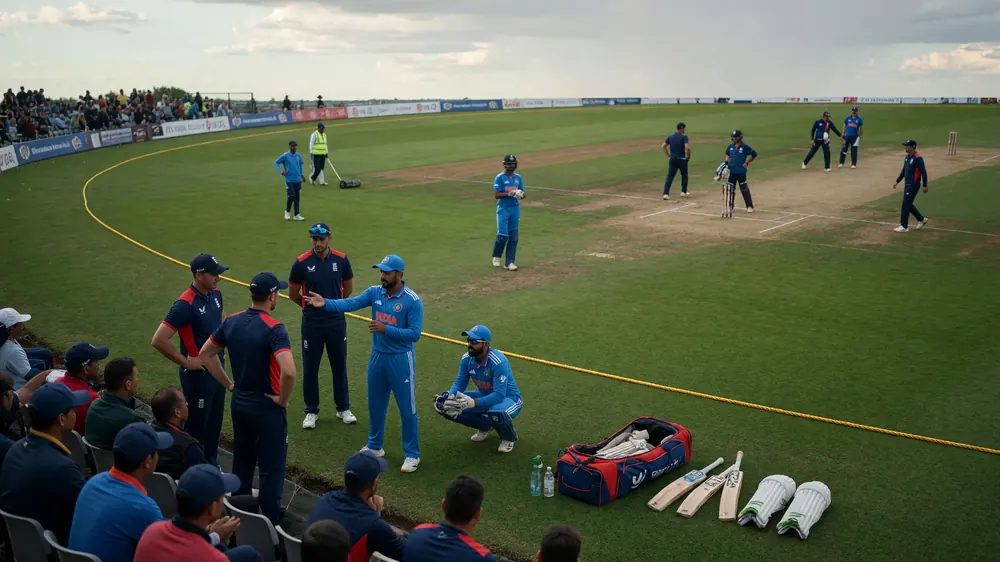
The weather strip for Sunday in London pointed to pleasant match-day conditions: temperatures between 21°C and 23°C during playing hours, skies shifting from partly sunny to overcast through the afternoon, and a zero percent precipitation chance that supported a complete game. For fantasy, a clean no-rain call removes the shortened-match tax that usually punishes pure bowlers and rewards batters who might otherwise lose overs.
Overcast phases still matter for swing bowlers even when rain stays away. Managers who remembered Cardiff’s seam success had a second reason — cloud cover, not just home advantage — to keep Archer, Atkinson and Mahmood in the consideration set rather than fading them for cheaper Indian options.
Head-to-head context without overclaiming form
Across one-day internationals, India and England were cited at 112 meetings: India 62 wins, England 45, two ties, three no-results. India had also taken four of the previous five completed contests between the sides. Those ledger lines are useful colour; they are not a substitute for the two-match sample from this tour. Birmingham and Cardiff already supplied the live form that mattered more for a single decider than a multi-decade win column.
Where the ledger did help fantasy thinking was in resisting panic fades. A side that has historically edged the rivalry and that had already won in Birmingham did not need a full teardown after one collapse in Cardiff. The practical response was selective: protect the batters who had already scored (Gill, Kohli, Iyer) while paying respect to the English seamers who had just taken the series to 1-1.
Fantasy construction lessons that still hold after the weekend
Looking back from this desk’s later reading of the same briefing, several construction rules from that Lord’s build remain portable for future England–India ODIs and for any series decider played on a seaming London surface.
1. Series state beats season averages. A 1-1 lock concentrates ownership on proven performers from the same series. Root’s unbeaten 99 and the twin Indian fifties in Cardiff were fresher signals than career strike rates pulled from a different continent.
2. Injury replacements change salary math, not just names. Sundar’s hamstring absence was not a like-for-like swap if Kuldeep came in. Losing batting depth forces a conscious choice: rebuild the all-rounder slot through Axar or Dube, or spend the freed money on an extra specialist.
3. Pitch bands set captain archetypes. A 270–280 first-innings expectation is a middle path. It supports a top-order captain who can bat 40-plus overs and a premium death bowler who can finish both innings. It is less friendly to pure pinch-hit differentials who need a 320-plus slugfest to justify the risk.
4. Broadcast timing is part of the process. When India coverage starts before the toss at 3:30 PM IST, the edge often sits with managers who draft two lineups the night before — one if the spinner plays, one if the extra seamer plays — and swap only the final one or two slots after the sheet.
5. Home seam after a four-wicket win is not a trap by default. Atkinson and Archer had just taken three wickets each. On a Lord’s surface flagged for early movement, fading both of them solely because they were “popular” was a process error, not a differential strategy.
For ongoing match notes, squad alerts and venue reads written the same way, the desk keeps a running file under fantasy cricket news — the same shelf this retrospective sits on.
What the briefing deliberately did not settle
Even a detailed preview leaves blanks that honest fantasy writing should not fill in later. The 18 July note did not publish the official toss result, the confirmed elevens after warm-ups, or the match scorecard. It did not assign player ratings for the finished game. Those absences are left empty here as well. A retrospective that invents a winner or a player-of-the-match claim would be a different article, and it would no longer be anchored to the source record this desk was assigned.
What the briefing did settle is still enough for a durable lesson: when a short bilateral series reaches a single match at Lord’s with the ledger even, the highest-value information is local and recent — the previous result, the injury that forces a bowling change, the surface band, and the weather that keeps a full fifty overs on the board.
Legacy for later India–England white-ball builds
The 2026 Lord’s decider preview remains a clean template for how this desk wants series-decider coverage to work. Lead with the series state. Name the injury that actually changes the XI. Separate projected elevens from confirmed ones. Give the pitch a numeric band instead of vague adjectives. State the rain risk in plain numbers. Leave the head-to-head as context, not as a prediction engine.
Managers who internalised that structure on 18–19 July had a clearer path through the noise than anyone chasing social-media “locks.” The same structure still applies the next time India and England meet with a trophy or a series on the line on an English slope ground: trust the last match’s wicket-takers, protect the batters who already posted fifties, price the spinner-or-seamer decision as a salary event, and lock captains only after the toss window the broadcaster actually opens.
That is the usable residue of the Lord’s weekend — not a rewritten scorecard, but a process that still earns its place in the contest build whenever the next England–India one-day decider appears on the calendar.
Source note. Match preview facts drawn from Sai Vaitla, “India vs England 3rd ODI: Free Live Streaming, Playing XI, Pitch Report, Weather Report, Head-to-Head | India tour of England, 2026,” Cricket Addictor, 18 July 2026, 05:56 PM IST. Editorial synthesis and fantasy framing by Betwinner Cricket Desk, 23 July 2026. Projected XIs were pre-match estimates in the source, not post-match confirmed sheets.