Tonight's fantasy cricket predictions, written like a captain's call.
A pitch report, a toss lean, and a match-by-match fantasy read for the next 48 hours of fixtures. Updated as team news arrives.
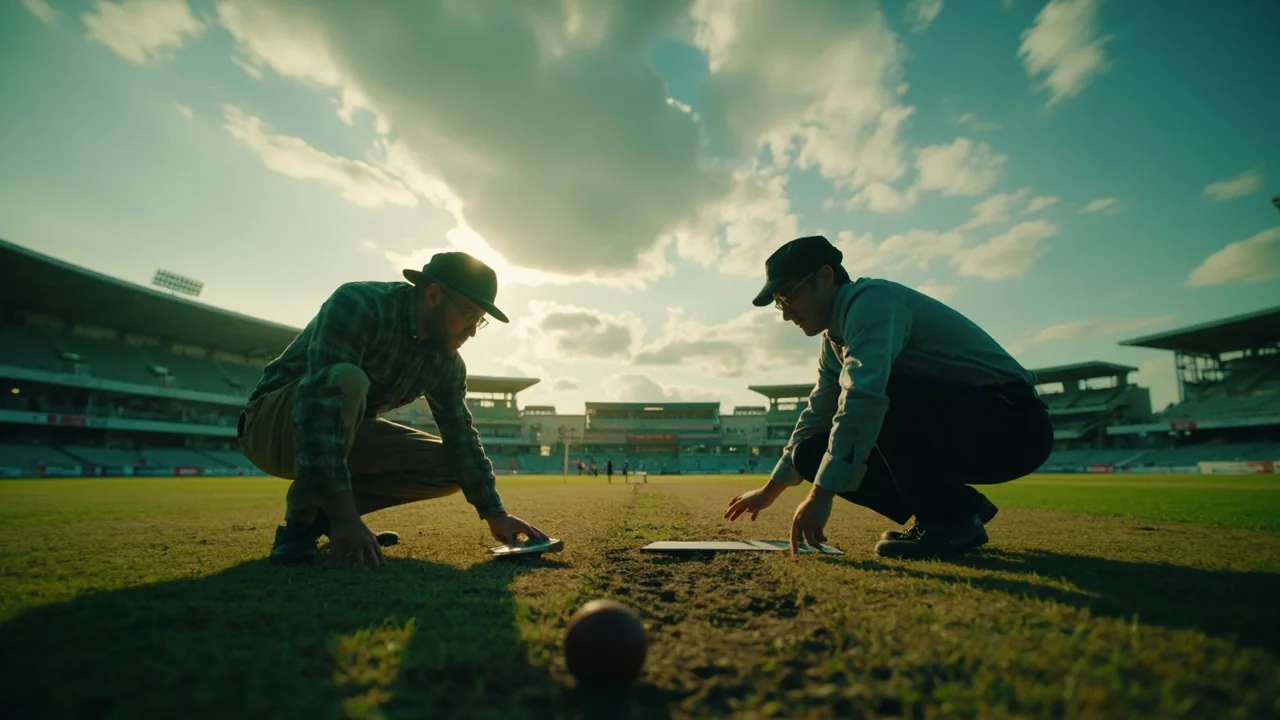
Read the sky, then read the lineup.
Every prediction starts with the venue and the weather — not the form table.
Predicted fantasy outcomes.
Each match card shows the desk's lean, the key fantasy angles, and the captain candidates worth the multiplier.
Toss lean: Bowl first.
Captain candidates: anchor batter, middle-overs wrist-spinner, death-overs seamer.
Toss lean: Bat first on a drying surface.
Captain candidates: off-spinner with control, middle-order anchor who plays spin well.
Toss lean: Bowl first if dew clears, bat first if it's a dry afternoon.
Captain candidates: power-hitter opener, death-overs seamer with yorker accuracy.
Toss lean: Bowl first on a flat deck.
Captain candidates: top-order anchor, middle-overs spinner, death-overs pace all-rounder.
Predictions are inputs, not instructions.
The desk's role is to surface the strongest angles — venue, toss, role, form. Your role is to combine them with the contest type you actually entered.

The four signals we weight first
- Venue: boundary dimensions, surface history, average first-innings score
- Weather: dew, wind, cloud cover — these flip the bowling order
- Toss lean: what the captain is most likely to choose given the above
- Role matchup: which player profile gains value once venue and toss are known
Form, recent minutes, and ownership projections all matter — but they sit on top of those four signals, not before them.
See the full methodology →Why the toss call still matters.
In the shortest formats, the captain's call at the toss can swing the fantasy ceiling by 20-30%. Here's how to think about it.
Three patterns worth memorising
These aren't universal — they're patterns the desk has watched repeat across tournaments.
- Dew + second-innings chase: spinners lose grip, top-order anchors with strong powerplay scoring gain value
- Drying surface + day-2 test: bat first is the modern call; the bowler-friendliness compounds
- Short square boundaries + T20: bat second if dew is absent (boundary value compounds with wickets in hand)

Low-ownership names with a real ceiling.
The desk's contrarian captain candidates — lower ownership, higher variance, but with a credible path to 2x the consensus pick.

| Player | Role | Why contrarian |
|---|---|---|
| Spinner B | Wrist-spin | Sub-10% ownership, two wickets in last three outings, today venue rewards turn |
| Pace A/R | All-rounder | Salary drops with batting-order slide, death-overs role returns projection |
| Top-order B | Anchor | Coming back into the side, powerplay usage is the unlock |
| Death-overs seamer | Pace | Yorker length, on a short square boundary the dot balls save the captain a multiplier |
Predictions, frequently asked.
What we do, what we don't, and how to use the desk's reads alongside your own.
How far in advance are the predictions written?
Predictions are published 4-8 hours before the toss, with updates whenever team news, weather, or the playing surface changes. We do not lock the page until the toss happens.
What is your hit rate?
We track captain picks and match calls over a rolling 30-day window. The latest numbers are summarised on the desk's methodology page and updated weekly.
Do you cover women's cricket?
Yes — WPL, WBBL, and bilateral women's internationals are part of the calendar. Women's T20 matchups often have lower ownership ceilings, which makes the captain call higher-variance and higher-reward.
Can I request a specific match be covered?
Yes. The desk accepts match requests through the contact page, prioritising fixtures with high fantasy engagement and tight captaincy decisions.
Pre-toss reads, every night.
The desk covers the next 48 hours of fixtures. No account, no deposit, no chaser.
How the desk builds a prediction call.
The desk's prediction method is a four-step read, applied uniformly to every fixture on the calendar. Here's the long-form version.
Step 1 — Read the venue
The venue is the structural read on a fixture. Surface type, average first-innings score, boundary dimensions, and dew history all sit at the foundation of the desk's read. A 200-run average Wankhede deck reads very differently from a 320-run Bengaluru chase under lights — and the captain pick that wins on one often loses on the other.
Step 2 — Read the weather
Weather is the second signal, and it flips the bowling order more often than punters realise. Dew in the second innings neutralises spin, gives the ball to the seamers who can land the yorker, and pushes the top-order anchors up the captain board. Wind direction affects the kind of delivery the captain can ask for. Cloud cover changes the ball's swing behaviour.
Step 3 — Read the role matchup
Once the venue and the weather are in place, the role matchup becomes the leverage. Powerplay scorers on a short straight boundary. Wrist-spinners on a turning subcontinental deck. Death-overs seamers on a flat short-square venue. The role matchup is where the captain pick earns its ceiling — or loses it.
Step 4 — Stress test the lineup
Once the captain pick is on the board, the desk re-ranks the rest of the lineup by likely outcome range. A team that wins a 30/70 split beats a team that wins a 50/50 in a 1,000-entry GPP. The stress test is the difference between a good call and a good call that wins.
Each step in the method is published in the public read on the prediction page, with the data attached. The desk does not lock the page until the toss happens — any change in team news, weather, or surface updates the call in real time.
What the desk publishes before every fixture
- Venue read — surface, dimensions, dew, weather
- Projected XI — likely XI with role tags
- Toss lean — what the captain is most likely to do
- Captain pick — consensus option with reasoning
- Differential option — low-ownership name with ceiling
- Last update — when the page was last refreshed
What the desk does not publish
- Unverified squad rumours (held until the official XI)
- Injury speculation (held until the franchise or board confirms)
- Ownership projections from leaked contest data
- Any "guaranteed winner" framing — the desk's reads are reads, not promises
The desk's predictions are updated at every team news event, every weather change, and every surface update. The "last update" timestamp is on every match card so the reader can see how fresh the call is.
Where the prediction desk hands off.
The prediction page is the lineup's first read. The other pages on the desk fill in the rest.
How the pick was made
The fantasy tips page is the long-form on the captaincy process — the four-step method, the cash vs GPP split, and the role-by-role read on the points system.
Captain math →Who the captain is
The player profiles are where the captaincy call gets its data. Form, role, venue splits, recent minutes — the four signals the captain pick is built on.
Player profiles →What the fixture shows
The live matches page is the source of the fixture list, the projected XIs, and the weather updates. The prediction page reads it; the live page writes it.
Live matches →What a good captain pick looks like.
The captain pick is the desk's single most important call. Here's the long-form version of what a good captain pick looks like in practice.
The 5-point read
A good captain pick is built from five data points: the venue (surface, dimensions, dew), the projected XI (role, batting order, bowling order), the form window (last four matches, role security), the contest type (cash vs GPP, field size), and the matchup (head-to-head at the venue, recent form vs this opposition). The desk's captaincy call has all five attached.
The stress test
Once the captain pick is on the board, the desk stress-tests it. What's the likely outcome range? 30/70 win/loss? 50/50? 70/30? A captain that wins a 30/70 split is a better pick for a GPP than a captain that wins a 50/50 — even if the 50/50 captain has a higher average projection.
The contrarian read
Every captain pick on the desk is published alongside a contrarian option. The contrarian is the lower-ownership player with a credible path to 2x — useful for GPP contests where ownership leverage matters as much as projection.
What a captain pick looks like on the page
- Venue read — surface, dimensions, dew
- Projected XI — role, batting order, bowling order
- Form window — last four matches, role security
- Contest type — cash vs GPP, field size
- Matchup — head-to-head at the venue
- Stress test — likely outcome range
- Contrarian option — lower-ownership name with ceiling
The captain pick is the desk's single most important call. The five data points, the stress test, and the contrarian option are all published on the prediction page — with the source attached.