Teams, told through their fantasy identity.
Projected XIs, role balance, bench depth, and venue tilt for every franchise and national side on the desk's calendar. Updated as squad news arrives.

A team is a structure, not a list of names.
Role balance, bench depth, and venue tilt are the things that decide a long-format contest.
IPL franchises, fantasy-side.
Each franchise's salary structure, projected XI, role balance, and the fantasy players to watch this season.
Pace-heavy attack, top-order anchors
Strong powerplay scoring, two frontline all-rounders, and a death-overs seamer who wins the multiplier on a flat deck.
MI fantasy profile →Spin-led, middle-overs choke
Two frontline spinners, a top-order anchor who builds long innings, and a lower-order hitter who closes the chase.
CSK fantasy profile →Star top-order, role depth tested
Three proven scorers at the top, the question is always the bench — the role depth will decide the playoff push.
RCB fantasy profile →All-rounder-heavy, six-hitting depth
Six-hitting depth down to number 7, two pace-bowling all-rounders, and a top-order that swings on powerplay intent.
KKR fantasy profile →Young top-order, wrist-spin variety
Young top-order with high ceiling, two wrist-spinners who can take wickets in clusters, and a bench that punishes weak lineups.
RR fantasy profile →Anchor-led, spin variation
Two anchor batters who build, a wrist-spinner with high wicket ceiling, and a death-overs pace option that swings on length.
DC fantasy profile →National sides, fantasy-side.
How each side's structure creates — or limits — fantasy value at a given venue.

| Side | Strength | Fantasy angle |
|---|---|---|
| India | Death-overs spin | Wrist-spinner multiplier, top-order anchors |
| Australia | Pace variety | Two frontline quicks, all-rounder ceiling |
| England | Top-order scoring | Powerplay anchors, lower-order six-hitting |
| South Africa | Pace-bowling all-rounders | Role balance, six-hitting depth |
| New Zealand | Death-overs seam | Yorkshire-style accuracy, lower-order value |
| Pakistan | Wrist-spin in Asia | Wicket clusters, top-order form swings |
| Sri Lanka | Spin on subcontinent | Middle-overs control, lower-order power |
| West Indies | Power-hitting depth | Six-bonus ceiling, all-rounders |
Why the bench matters more than the XI.
The team that wins the long-format contest is the team whose bench can absorb an injury or a form slump without resetting the role balance.
What "bench depth" means in fantasy
The bench isn't just a list of backups — it's the structural insurance that keeps the role balance intact when the first XI changes.
- Anchor backup — a similar top-order profile, not just any batter
- Spinner backup — same role, ideally different matchup strengths
- Pace backup — variation in length, not duplication
- All-rounder backup — the most valuable bench slot in a long-format contest

What a side's field tells you.
The captain's field placement is the clearest single signal of intent — and a strong read on which bowler gains value in the next match.
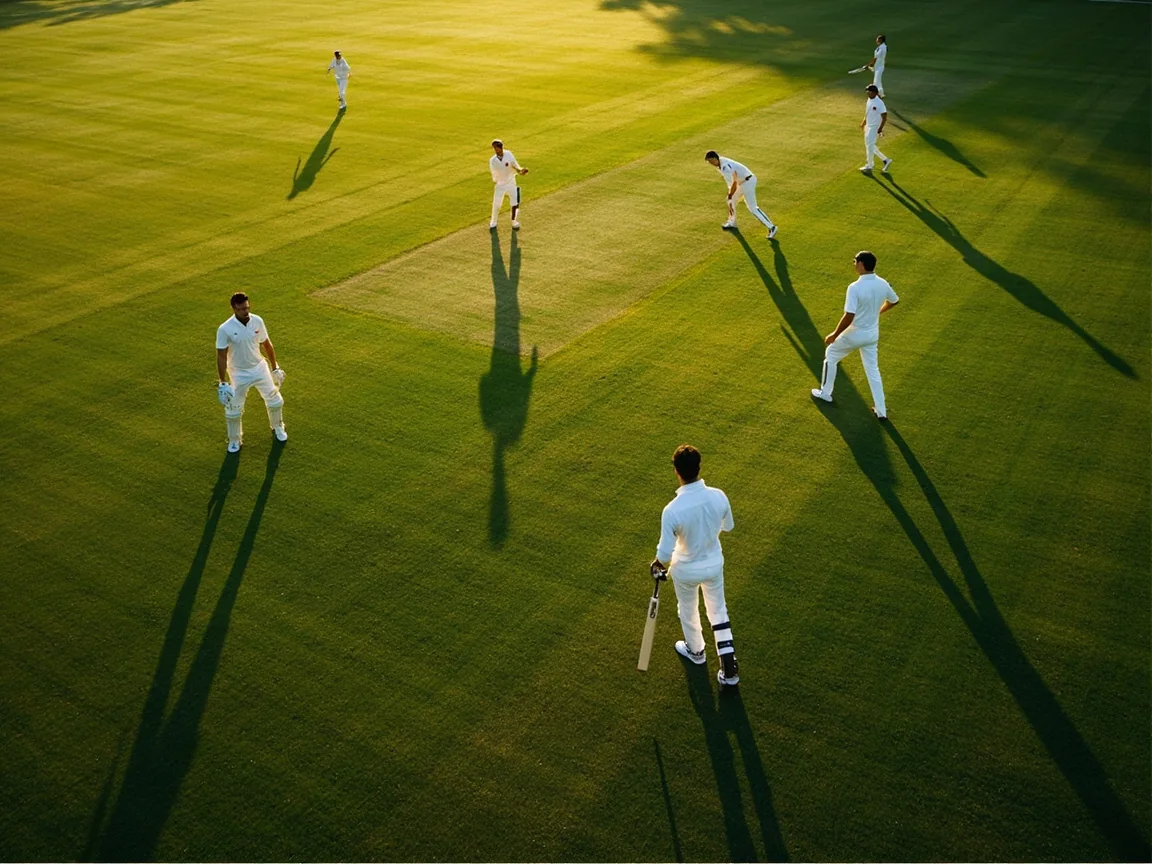
Three field signals worth memorising
- Defensive ring + slip: the bowler is on a holding line; the captain wants wickets, not runs
- Attacking ring + short mid-wicket: the bowler is in the powerplay; boundary saves are the priority
- Spread field + long-off back: the death-overs seamer is on; dot balls are the priority
These signals rotate through the innings — the desk tracks the field as it shifts to call the death-overs value before the next fixture.
Teams, frequently asked.
Common questions about role balance, projected XIs, and bench depth.
How often are projected XIs updated?
Projected XIs are refreshed with every squad announcement, training update, and toss-time team sheet. For the IPL and major bilateral series, the desk publishes a daily watchlist for the next 7 days.
Do you cover associate nations?
Yes — associate nations are covered when they appear in qualifying tournaments or major ICC events. Coverage is lighter for associate T20 leagues outside the ICC calendar.
How do you read a likely XI before the toss?
Three signals: the net session (batting order, who is bowling in the middle), the press conference (injury updates, role changes), and the venue (which profile the captain is most likely to pick).
What is the desk's stance on women's franchise leagues?
WPL, WBBL, and The Hundred women's competition are covered as primary events — squad pages, role breakdowns, and projected XIs are part of the regular desk output.
Read the team before you pick a player.
Structure and bench depth decide a season; a single hot performance rarely does.
How a franchise's structure creates fantasy value.
Franchise leagues are the most fantasy-active format in the world. The desk's view is short: the franchise that wins the auction on structure, not stars, is the franchise that gives its fantasy players the most leverage.
Role balance over star power
A franchise with three top-order stars and a weak middle order is a fantasy trap. The middle order wins GPPs, the role balance wins seasons. The desk tracks each franchise's salary distribution by role — top-order, middle-order, all-rounder, pace, spin — and the salary-to-projection ratio for each.
Death-overs bowling
Death-overs bowling is the most under-priced role in most auctions. The wickets are harder to find, the dot balls are rarer, and the franchise that secures two death-overs options pays less per projected fantasy point than the franchise that pays retail for a third top-order star.
Spinners in the powerplay
The 2026 auction is the first in several years where wrist-spinners with explicit powerplay roles are commanding premium prices. The franchise that has two such spinners wins the middle phase; the franchise that has none is forced to over-rely on pace in conditions where pace is the second-best option.
Reading the franchise balance
- Salary distribution — what % of the cap went to each role
- Top-order depth — three strong batters or one strong + two fillers
- Middle-order intent — finishers with six-bonus ceiling, or accumulators
- Pace variety — left-arm + right-arm + variation, or duplication
- Spin role — powerplay wrist-spinner, middle-overs finger-spinner, or both
- Bench depth — backup for each role that doesn't reset the balance
Each franchise profile on the desk is built around the same six questions. The answers don't change between auctions; the salary structure does.
Where the teams page hands off.
The teams page is the structural read. The other pages on the desk fill in the player-level data.
The roster breakdown
The player profiles are where the team's role structure gets the player-level data — form, recent minutes, venue splits, and differential picks.
Player profiles →The franchise league
The IPL page is the desk's long-form coverage of the world's most-watched T20 league — auction reactions, captaincy log, venue-by-venue cheat sheets.
IPL coverage →The team in action
The predictions page is where the team's structure is read in the context of a specific fixture — captaincy calls and differential picks updated nightly.
Predictions →What the squad list tells you.
The squad list is the cleanest single read on a team's role structure. Here's the long-form version of how the desk reads the list.
Top-order shape
A squad with three top-order anchors and one power-hitter projects a different role structure than a squad with two anchors and two power-hitters. The desk reads the squad list to identify the batting shape, then projects the role assignments in the likely XI.
All-rounder depth
A squad with three pace-bowling all-rounders and one spin-bowling all-rounder projects a different role balance than a squad with the inverse. The desk's view: pace-bowling all-rounders are the most valuable bench slot in a long-format contest, because they cover both departments without resetting the role balance.
Spin variation
A squad with two finger-spinners and one wrist-spinner projects a different matchup than a squad with two wrist-spinners and one finger-spinner. The desk's view: wrist-spinners gain value in the powerplay (where their googly is hardest to read) and in the death overs (where they can bowl the wrong'un to a left-hander).
Pace variety
A squad with three right-arm pace bowlers projects a different matchup than a squad with two right-arm and one left-arm. The desk's view: left-arm pace is the most under-priced role in most auctions, because the squad balance has to accommodate the angle change.
How the desk reads a squad
- Top-order shape — anchors vs power-hitters
- Middle-order intent — finishers vs accumulators
- All-rounder depth — pace-bowling vs spin-bowling
- Spin variation — wrist-spin vs finger-spin, role mix
- Pace variety — left-arm vs right-arm, length mix
- Bench depth — backup for each role that doesn't reset the balance
Each squad profile on the desk is built around the same six questions. The answers don't change between tournaments; the salary structure does.