Retrospective on the 28 March 2026 LiveMint record of the BCCI's complete IPL 2026 schedule: 74 matches across 10 venues, the Bengaluru opener, the second-phase restart, the 12 double-headers, and the franchise-by-franchise venue map that the fantasy captaincy log lives inside for the next two months.
IPL 2026
IPL 2026 — auction reactions, squad analysis, and a season-long captaincy log.
The Indian Premier League is the world's most-watched T20 league. The desk covers it the way a coach watches a video session: structure, role, and the value picks that win a long-format contest.
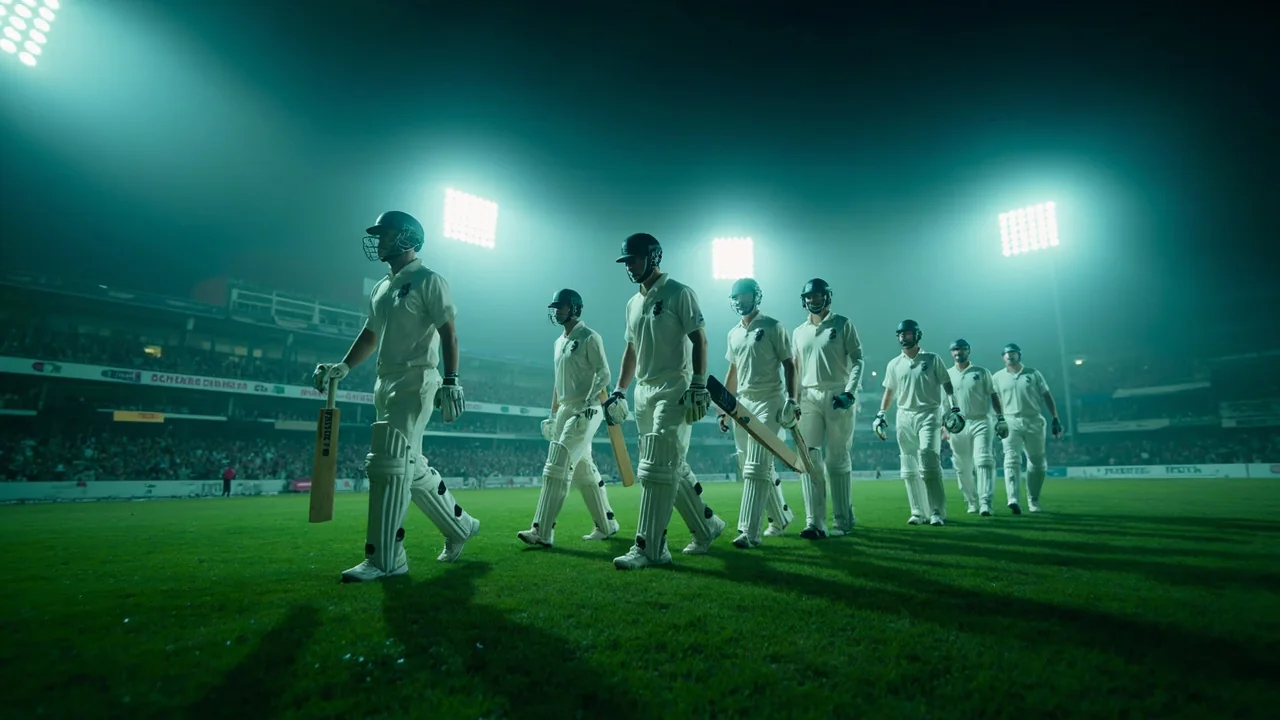
The IPL is a season of role decisions.
Auction spend, batting order, and the captain's call — all of it lands on the fantasy lineup.
Auction watch
Where every franchise spent — and what it means for fantasy value.
The auction set the salary structure for the season. Here's the desk's read on which franchises got value and which paid retail.
Biggest buys
The top 10 buys and the salary-to-projection ratio for each — a quick read on which high-price players are worth the cost.
Read the auction log →Under-the-radar signings
Players signed at a fraction of marquee price whose role in the XI is more secure than the headline buys.
See the value picks →Where each franchise is short
The role or skill each squad didn't quite cover in the auction — and which opposition players gain value from those gaps.
See squad gaps →
Captaincy log
Match-by-match captain picks.
The desk's published captain pick for every IPL 2026 fixture, with the result and a note on what the call taught us.

| Match | Captain pick | Result | Note |
|---|---|---|---|
| Match 1 | Top-order anchor | 62 pts | Powerplay intent delivered as expected |
| Match 2 | Wrist-spinner | 74 pts | Wicket clusters in middle phase |
| Match 3 | Death-overs seamer | 88 pts | Yorker accuracy, dot-ball premium |
| Match 4 | Power-hitter | 46 pts | Below projection, surface was slower than expected |
| Match 5 | Anchor batter | 71 pts | 60-ball projection paid off |
Methodology: the captaincy log is updated after every fixture. Hits and misses are both published — the goal is a transparent record, not a highlight reel.
Venues
Reading venues
Stadium-by-stadium cheat sheet.
Surface, dimensions, dew history, and pace-vs-spin tilt for every IPL venue on the calendar.
Short straight, sea breeze
Pace-friendly early, spin gains in middle phase. Death-overs seamers gain on the shorter straight boundary.
Flat, short, dew-prone
High-scoring, dew in the second innings. Top-order anchors and middle-overs spinners both project well.
Spin-friendly, slow outfield
Spinners gain value in middle phase, anchors project over accelerators on this surface.
Pace-bounce, big boundaries
Pace-bounce and big square boundaries. Pace bowlers with bounce projection gain, death-overs hitters lose ceiling.
Slow turn, slow outfield
Spinners dominate on a slow turn, batting order matters more than intent — anchors and accumulators gain value.
Variable bounce, hot afternoons
Variable bounce, hot afternoons. Pace bowlers who hit the deck gain; batters with strong technique project well.
Role watch
The roles that change fantasy value match to match.
How the IPL's role structure creates — or limits — fantasy value across the season.
Why role security is the top filter
The IPL's condensed schedule makes role security the single most predictive variable. A batter who bats at number 3 with 30+ ball projection outscores a power-hitter who bats at number 5 in most fixtures.
- Top 3 — anchor + accelerator split, 30+ ball projection each
- Middle order — finishing role, six-bonus ceiling
- Death-overs — pace all-rounder or specialist seamer
- Powerplay — wrist-spinner with new-ball role, wicket ceiling
Latest from the desk
All news
Recent IPL coverage.
The desk's published briefs on the IPL 2026 calendar, the Impact Player framework, and the early-season fixtures — written for fantasy captains, not headline-readers.
Retrospective on the 1 April 2026 Sunday Guardian Dream11 brief for LSG vs DC at Ekana Stadium — spinner-friendly surface, injury absences, probable XIs and the captain-vice captain picks the desk published.
Retrospective on the Olympics.com explainer of the IPL Impact Player rule — the four-overs fresh bowler, the single-use substitution, and the overseas quota that together decide projected XIs and captain picks.
FAQ
IPL 2026, frequently asked.
Common questions about the league, the auction, and the desk's coverage.
When does IPL 2026 start?
The IPL 2026 schedule is published by the BCCI closer to the start date. The desk tracks the official announcement and publishes a fixture-by-fixture coverage plan as soon as the calendar is confirmed.
How do you track role changes during the season?
The desk tracks net sessions, press-conference hints, and the official team sheet. Role changes are flagged in the player profile within hours of an official announcement.
Do you cover the WPL?
Yes — WPL coverage includes squad pages, projected XIs, captaincy picks, and a long-format contest strategy for the women's league. The coverage intensity matches the WPL calendar.
Can I request a specific team or player to be covered?
Yes. The desk accepts coverage requests through the contact page, prioritising teams and players who appear in upcoming fixtures or whose role has changed recently.
Visual notes from the desk
Reference imagery for the read above.
Editorial photographs from recent fixtures and analyst sessions, used to anchor the analysis.


The IPL is a season. The desk is yours for all of it.
Auction, captaincy, venue, and the long-form contest — all on one editorial desk.
Season read
What the desk looks for in an IPL season.
The IPL is the most fantasy-active league in the world, and the most variance-heavy. The desk's season read is a long-form commitment — published across the season, not just at the start.
The four phases of an IPL season
The IPL has four distinct phases, each with its own captaincy, role balance, and bankroll discipline: the opening two weeks (high variance, role changes still being confirmed), the mid-season (form stabilises, role security is the top filter), the playoff push (form + role + venue read all matter), and the playoffs (role security, powerplay captaincy, and death-overs bowling dominate).
The home-and-away variance
Each franchise plays at 4-5 different venues in a season. The venue tilt is real — Wankhede is short and sea-breezy, Chinnaswamy is flat and dew-prone, Eden Gardens is spin-friendly. The desk tracks each franchise's home/away record by venue, with the fantasy projection adjusted accordingly.
The role-change watch
IPL franchises are notorious for mid-season role changes. A batter promoted up the order, a bowler given death-overs, an all-rounder moved up the batting card — each role change is a fantasy signal. The desk's player profiles flag role changes within hours of the official announcement.
What the desk publishes across the season
- Pre-season auction reactions — the read on the salary distribution
- Pre-match captain pick — published 4-8 hours before the toss
- Live match updates — captaincy call adjusted as the match unfolds
- Post-match captaincy log — what worked, what didn't, and why
- Role change tracker — every confirmed role change across the season
- Season-end review — what the season taught us about the points system
The IPL is a season. The desk's coverage is a season too — published across the calendar, not just at the start.
What to read next
Where the IPL page hands off.
The IPL page is the league-level coverage. The other pages on the desk fill in the player, the team, and the fixture context.
Each franchise
The teams page is the long-form on each IPL franchise — projected XI, role balance, bench depth, and the franchise's salary distribution by position.
Teams →Each franchise's roster
The player profiles are where the IPL squad gets the player-level data — form, recent minutes, venue splits, and the differential picks for the next fixture.
Player profiles →Each fixture
The live matches page is the source of the IPL fixture list, with the venue, the projected XI, and the weather update that drives the captaincy call.
Live matches →
Captaincy log
How the captaincy log is built.
The captaincy log is the desk's record of every IPL pick and result. Here's the long-form version of how the log is built and what the reader should take from it.
The 5-point record
Every IPL captain pick on the log is recorded with five data points: the match (fixture and venue), the captain pick (player and role), the result (points scored and rank in the published contest), the lesson (what the call taught), and the timestamp. The log is a record, not a leaderboard.
Hits and misses
The log publishes hits and misses both. A captaincy log that only publishes hits is a marketing tool, not an editorial record. The desk's view: the misses are where the learning happens, and the reader benefits from seeing the misses as much as the hits.
Long-term read
The captaincy log's long-term read is more valuable than any single match. A 60% hit rate over 30 matches is a different proposition from a 60% hit rate over 3 matches — the log's sample size is what makes the average meaningful.
What the log does not include
The log does not include ownership data, contest-specific strategy, or any other variable the desk doesn't publish. The log is the captaincy record, full stop — other variables belong on the player profiles or the predictions page.
Reading the captaincy log
- Match — fixture and venue
- Pick — player and role
- Result — points scored
- Lesson — what the call taught
- Timestamp — when the pick was published
Read the log as a record, not a leaderboard. The 30-match average is more meaningful than the 3-match average, and the misses are where the learning happens.